With all the benefits that come with millets, whether it’s for economic, health, or environmental reasons, we cannot turn a blind eye to some of the major problems with it.
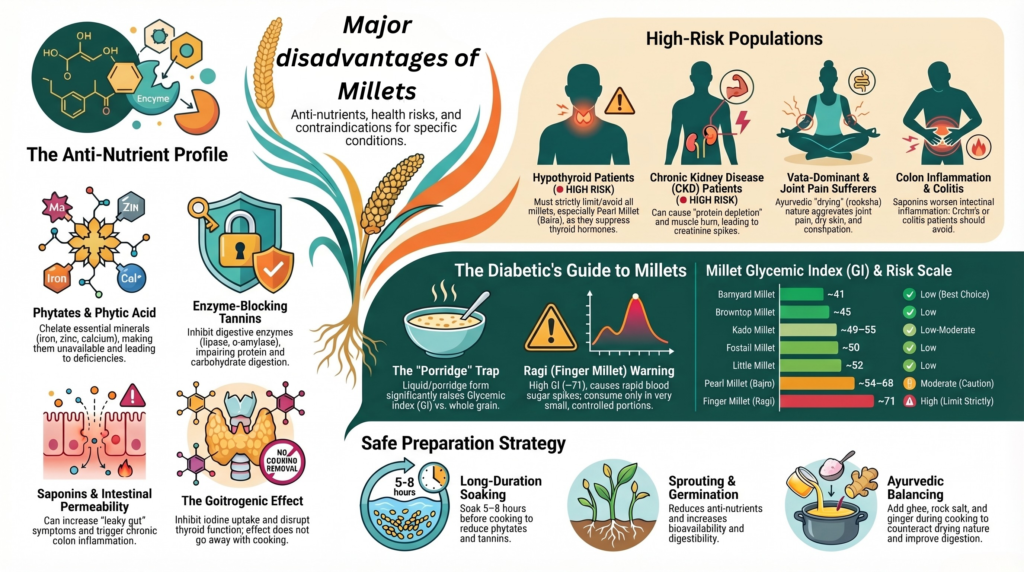
major disadvantages of millets:
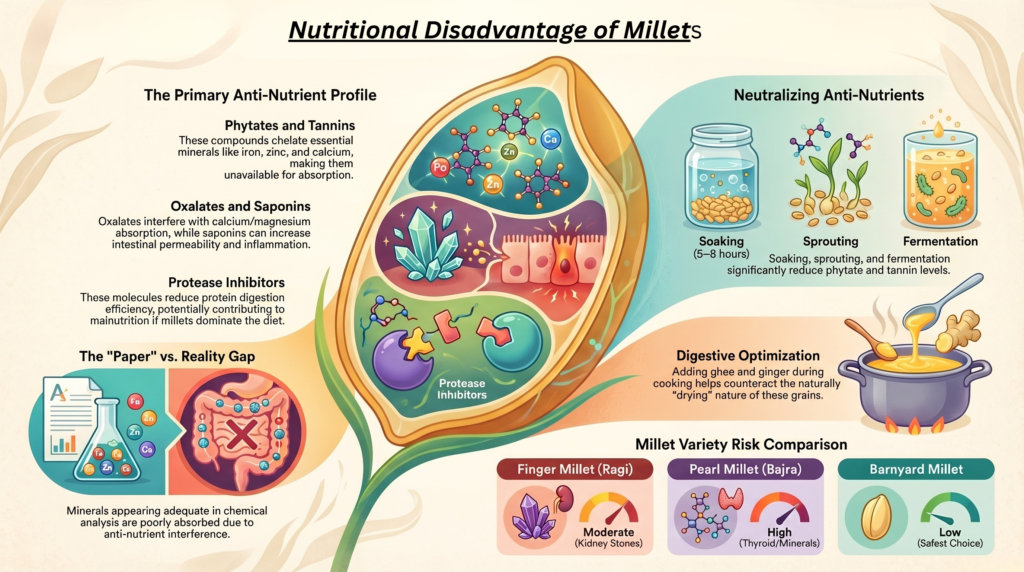
- Millets have a high antinutrient content. This is one of the most overlooked drawbacks of millets: they contain phytic acid, tannins, oxalates, lectins, and protease inhibitors, which are not very good.
-
- Phytic acid usually chelates essential minerals like iron, zinc, and calcium, making them unavailable for absorption. This can result in mineral deficiency if millets are a large part of your diet.
-
- Tannins are known to inhibit digestive enzymes like trypsin, amylase, and lipase, and bind protein, impairing protein and carbohydrate digestion.
-
- Oxalates interfere with calcium and magnesium absorption by forming complexes with proteins that inhibit digestion, and they also increase the risk of kidney stones.
-
- Saponin Initial intestinal permeability interferes with the absorption of fat-soluble vitamins (vitamins A and E) and may trigger low-grade inflammation in the colon.
-
- Protease inhibitors reduce the digestion efficiency of protein and may cause
-
- Goiterogenic effect (thyroid disruption)
These are some of the most serious and underappreciated disadvantages of using millets.
-
- Millets contain polyphenols, including flavonoids like apigenin and luteolin, which inhibit the uptake of iodine by cells and impair the secretion of thyroid hormones. They reduce organification of iodine by the thyroid peroxidase enzyme, unlike the goitrogenic effect of vegetables such as broccoli and cabbage, which is lost upon cooking. This effect of millets does not go away with cooking.
-
- If you consume millets regularly in excess, it can lead to goiter (enlargement of the thyroid gland) and hypothyroidism.
-
- Pearl millet ( Bajara ) contains goitrogens that may interfere with thyroid function with excessive consumption.Digestive discomfort ( bloating, gas, and constipation )
-
3. Many people have experienced digestive issues when switching to millets or consuming large quantities.
-
- Millets are drying and light in Ayurvedic nature, which increases vata (the air element in the body), leading to constipation and bloating.
-
- Millet contains high fiber, which is beneficial for most but may cause fermentation in the gut in people who are not accustomed to high-fiber diets, resulting in gas and bloating.
-
- When millets are not properly cooked or soaked, they remain largely undigested, which may worsen the bloating effect.
-
- Pearl millets are heavy, oily, and spicy food that can slow digestion.
-
- People who already suffer from irritable bowel syndrome( IBS) or a weak digestive system are especially susceptible.
4. Nutritional imbalance when overconsumed.
A millet-dominating diet or an only millet diet is dangerous, according to a nutritionist and doctor.
-
- Millets are a good source of amino acids, but very high amino acid from millet-only diets is not recommended.
-
- Overreliance on millets as a complete replacement for rice and wheat without dietary diversity can lead to nutritional deficiency.
-
- Our millets are not a complete food; they lack several nutritional nutrients critical to the body, as we have discussed earlier.